KING OF THE MOUNTAINS
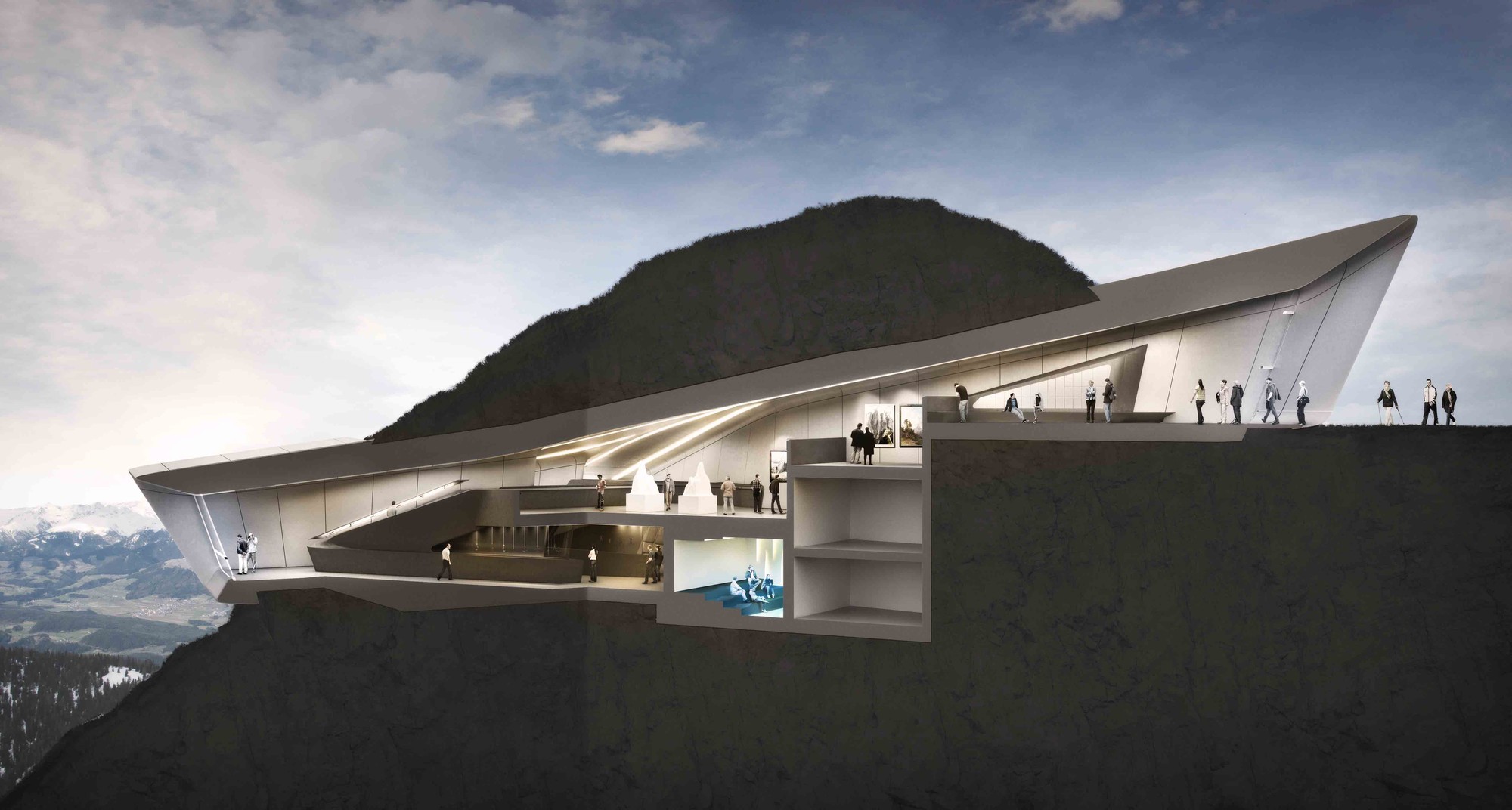
The Italian mountaineer Reinhold Messner was the first person to climb all fourteen “eight-thousanders” of the world — mountain peaks higher than 8,000 meters. To share his love of the mountains with others, he took the initiative to open a series of mountain museums at various locations in South Tyrol. One of these stands on the Plan de Corones near Brunico. The windows resemble large, curious viewfinders that provide visitors with stunning views of the jagged Dolomite peaks. In this museum, you can learn more about the history of mountaineering. The other Messner museums focus on the cultures of mountain peoples, climbing, the myth of the mountains, ice, and glaciers. In many ways, Messner’s life mirrors the Grand Tour—a passage of challenge, transformation, and the return to share one’s hard-won wisdom with others.
Messner Mountain Museum, Kronplatz, Dolomites, messner-mountain-museum.it
TIME TRAVEL
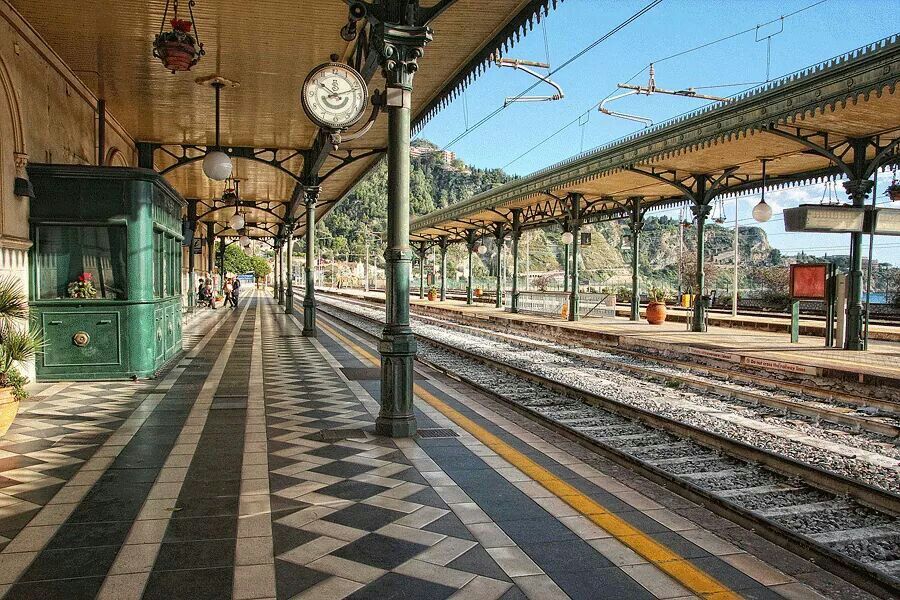
As soon as you step out at the station, you get the feeling that you’ve traveled back in time. The first version of the Taormina-Giardini railway station in Sicily was opened in 1866, but in the 1920s it was completely rebuilt according to a design by architect Roberto Narducci (1887–1979). The reconstruction was part of a renovation program by the State Railways, during which even a castle, the Castello di Villagonia, and the chapel of the Madonna di Porto Salvo had to make way. In the Neo-Gothic station building, you can still see decorative elements that once belonged to the demolished castle. The rooms are furnished with wooden furniture, and the walls and ceilings are adorned with frescoes and reliefs by Salvatore Gregorietti (1870–1952). In many ways, arriving here feels like entering the kind of inner journey I describe in the Grand Tour — a moment of crossing thresholds where past and present meet, inviting you to rediscover the timeless beauty of your own story.
Stazione di Taormina-Giardini, Via Nazionale, Villagonia (Sicily)
ROTUNDA ART
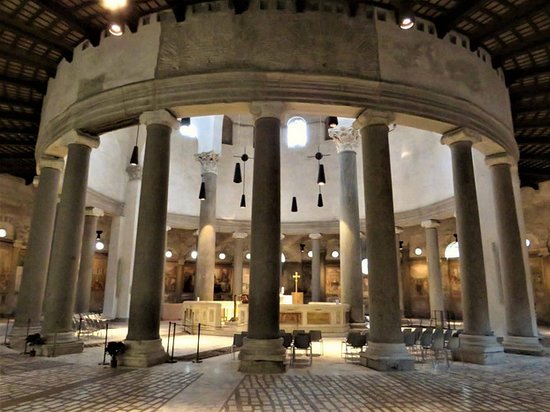
It may not be one of Rome’s most famous churches, but it is certainly one of the most remarkable. You should, however, be prepared for what awaits you inside: frescoes of brutal martyrdom scenes adorn the walls of the outer circle. A circle? Indeed — though from the rectangular entrance of the Basilica di Santo Stefano Rotondo, it isn’t immediately apparent that the church, built in the 5th century by order of Pope Sixtus III, is round. It is, in fact, one of the oldest and largest circular churches in the world. On December 26, the feast day of Saint Stephen, a mass is celebrated here. The circular harmony of this sacred space, combined with the dramatic frescoes that capture faith and suffering, evokes the spirit of Peter de Kuster’s The Grand Tour — a journey through art, meaning, and the timeless dialogue between beauty and the human soul.
La Basilica di Santo Stefano Rotondo al Celio, Via Santo Stefano Rotondo, Rome
CINEMA & BOOKS
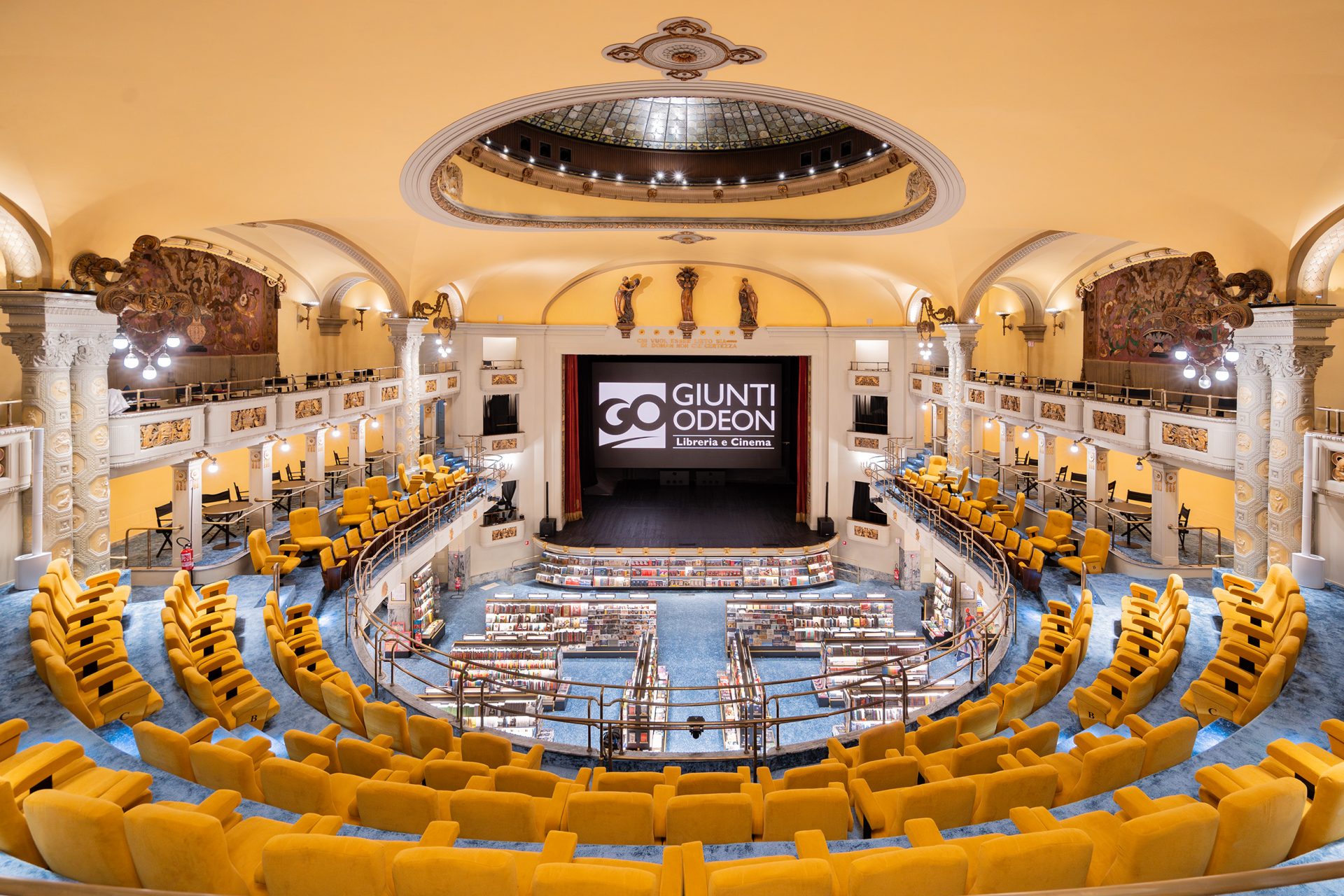
As both a bookstore and a cinema, Giunti Odeon in Florence is filled with stories. Since 1922, this art deco–style cinema has occupied a building near Palazzo Strozzi. A century later, it was beautifully renovated, with its art deco details carefully preserved. During the day, you can sink into the ochre-yellow seats and take your time admiring the stained-glass dome, watching people weave their way through countless shelves of Italian and English books, or enjoying a cup of coffee. In the evening, the lights dim and it’s film time. The program ranges from classic masterpieces to popular new releases, with screenings for both adults and children. In its blend of books, films, and quiet contemplation, Giunti Odeon perfectly reflects the spirit of The Grand Tour, In Search of Happiness — a journey through art and imagination where every story brings you a little closer to joy.
Giunti Odeon, Florence. giuntiodeon.it
 The Grand Tour